A house fire can affect far more than the room where the flames started. Heat can damage nearby materials, smoke and soot can travel through a Seattle home, and water used by firefighters or sprinkler systems may soak flooring, drywall, insulation, cabinets, and belongings. Some damage is obvious when you walk through the property. Other conditions can remain inside wall assemblies, beneath floors, above ceilings, or within connected spaces.
For homeowners, the first few days can bring questions about cleanup, insurance, costs, belongings, structural conditions, and how long recovery will take. Commercial property owners and managers may face many of the same questions while also managing tenants, employees, customers, inventory, and business operations.
Rytech Restoration of Seattle helps property owners and insurance professionals understand what happened and what needs attention next. The local team offers 24/7 emergency service, IICRC-certified and trained technicians, fire and smoke damage restoration, structural cleaning, water damage restoration, mold remediation, insurance coordination, direct insurance billing when applicable, and daily job monitoring. Rytech has also been helping families and businesses recover from property damage for more than 30 years.
Understanding how fire damage behaves gives you a better starting point for every decision that follows.
What Are the Common Causes of Fire Damage in Seattle Homes?
Cooking deserves special attention in Seattle. The Seattle Fire Department's Community Risk Assessment found that 63% of residential structure fires from 2019 through 2023 involved cooking, making it the leading cause by a wide margin. Electrical malfunctions, heating equipment, appliances, open flames, smoking materials, and other heat sources also contributed to residential fires.
The kitchen is therefore a logical place to focus prevention efforts. Seattle Fire specifically identifies unattended cooking as the city's leading cause of home fires. The department recommends staying in the kitchen when frying, broiling, or grilling and keeping materials that can burn away from the stovetop.
Winter introduces another local concern. Washington's State Fire Marshal reported that home heating equipment fires caused at least four fatalities statewide during 2024. Space heaters, fireplaces, furnaces, electrical loads, and other heating equipment deserve extra attention when colder Puget Sound weather arrives.
Building layout also changes how damage spreads. Seattle and King County contain everything from older wood-framed houses and brick buildings to modern townhomes, condominiums, apartments, and commercial properties. A fire may remain concentrated around its source while smoke travels upstairs, through hallways, into wall or ceiling spaces, or through a mechanical system.
“One lesson we want Seattle property owners to understand is that visible fire damage is only part of the inspection. Our area has older wood-framed homes, masonry, newer drywall assemblies, multifamily properties, finished flooring, and complex mechanical systems. Add our wet Northwest climate, cooking fires, heating equipment, plumbing losses, and hidden moisture, and every property needs to be evaluated based on how the damage actually moved through the building. Our team looks for the source, follows the damage, and gives customers clear information about what can be restored.”
Rene Castillo, Owner, Rytech Restoration of Seattle
Rene's published message for Rytech Seattle emphasizes finding the source of property damage, assessing its full scope, and addressing hidden moisture and structural concerns rather than relying only on what can be seen at the surface.
What Should I Do Immediately After a Fire?
Personal safety comes first. Leave the building, account for family members or occupants, and follow directions from the Seattle Fire Department and other emergency personnel. Do not treat the end of visible flames as the end of the property emergency.
Once emergency officials release the property, contact your homeowners insurance provider and a professional restoration company. Photographs, videos, inventories, and other records can help document the property's condition as the recovery process begins.
Avoid immediately wiping soot from walls, ceilings, cabinets, or belongings. Fire residues vary according to what burned, and cleaning methods that work on one material may not be suitable for another. Moving soot-covered belongings through clean rooms can also transfer residues to previously unaffected areas.
Rytech Restoration of Seattle provides 24/7 emergency response and states that a certified technician can arrive within four hours or less after contact with its live support team. The process begins with an assessment and restoration plan so the response is based on the property's actual conditions.
How Is Fire Damage Assessed and Inspected?
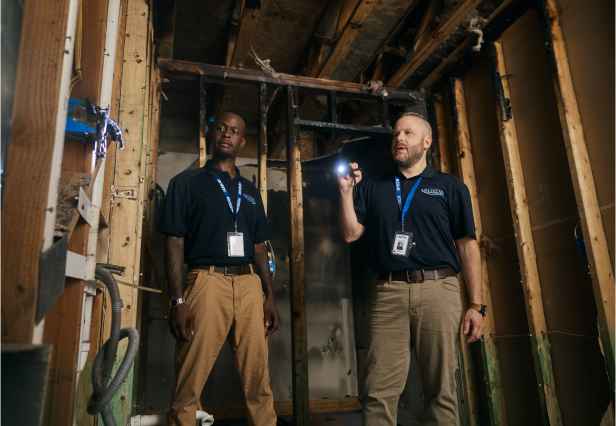
A professional fire inspection follows the damage rather than stopping at the visible burn area. Technicians evaluate fire and heat effects along with smoke, soot, odor, contents, structural materials, possible HVAC involvement, and water introduced during firefighting.
Imagine a kitchen fire in a Seattle home. Flames may remain near the stove while smoke moves into a hallway and upstairs bedrooms. Firefighting water may travel in a different direction, entering cabinets, flooring, wall assemblies, or rooms below the fire.
That moisture requires measurement. ANSI/IICRC S500 guidance supports using professional moisture-detection tools to identify affected materials and track moisture migration. Thermal imaging can help identify apparent surface-temperature differences associated with possible moisture, while moisture meters are used to verify conditions and gather measurements.
Inspection also extends into adjoining areas because water does not always remain inside obvious boundaries. Moisture can move beneath walls, through floors, or downward from affected spaces above.
The resulting documentation gives homeowners, property managers, restoration technicians, agents, adjusters, and insurance carriers a clearer picture of the loss. Rytech's approach includes photographs and project documentation so decisions can be connected to observed property conditions.
How Do I Start an Insurance Claim for Fire Damage?
Contact your insurance company or agent and report the fire. Provide the basic facts about what happened, when it occurred, and which areas appear affected. Your insurance professional can then explain the policy coverage, deductible, limits, and provisions that apply to the loss.
Documentation helps connect the property conditions with the claim. Photographs, videos, inventories, receipts, and information about damaged belongings can provide useful records. Professional restoration documentation adds inspection findings, moisture readings when applicable, photographs, affected-area information, and records of restoration work.
Most Seattle homeowners do not work through property claims every day. Agents, adjusters, carriers, and restoration professionals do, which makes communication among those parties valuable.
Rytech works directly with insurance companies and offers direct insurance billing when applicable. The company's fire restoration process also emphasizes regular communication so customers know where the project stands.
Commercial losses can require even more coordination. Property managers and business owners may be balancing occupants, inventories, operations, vendors, insurance professionals, and restoration work at the same time. Clear documentation gives those stakeholders a common source of project information.
What Is the Difference Between Professional Fire Damage Restoration and DIY Cleanup?
A black mark on a wall may look like ordinary dirt. Fire residue is more complicated.
Soot characteristics depend partly on what burned. Cooking oils, wood, plastics, fabrics, electronics, and other materials can leave different residues. The surface underneath matters too because painted drywall, finished wood, masonry, metal, flooring, carpet, and upholstery do not respond the same way to cleaning.
Professional fire restoration matches the procedure to the material and contamination present. Restoration methods can progress from less aggressive cleaning toward more aggressive methods depending on how the affected material responds.
The larger difference is scope. A homeowner may see a dirty wall, while a trained technician is also considering smoke migration, odor, adjacent rooms, contents, mechanical systems, and water used to extinguish the fire.
Rytech takes a restoration-first approach. Technicians evaluate materials that can be successfully cleaned, dried, and restored before unnecessary demolition takes place. Materials that are beyond restoration can then be identified and removed as part of the mitigation process.
What Is the Typical Cost of Fire Damage Restoration?
There is no single reliable price for a Seattle fire loss because affected properties can range from a small cooking fire to a major structure fire involving several rooms, contents, smoke, water, and structural materials.
Current 2026 national consumer data from Angi places professional fire damage restoration at an average of approximately $27,477, with most projects ranging from about $3,083 to $52,031. Water damage associated with a fire is estimated at approximately $1,000 to $6,000, while soot removal is estimated at approximately $2,000 to $6,000. These are national consumer estimates, not a Rytech quote or a Seattle-specific project estimate.
Affected square footage is only part of the calculation. The type of fire, quantity and type of soot, contents, water migration, odor conditions, accessibility, labor, specialty evaluations, and condition of building materials can all influence the restoration scope.
Restoration potential matters as well. When professional cleaning and drying can successfully preserve affected materials, unnecessary demolition and the work associated with removing salvageable materials may be avoided.
Insurance compensation depends on the individual policy and covered loss. Your insurance professional can explain how dwelling coverage, personal property provisions, deductibles, limits, and other terms apply to your situation.
How Are Smoke and Soot Removed After a Fire?
Professional smoke cleanup begins by determining where residues traveled. That often means looking beyond the room where flames were visible.
Technicians evaluate both the residue and the surface underneath it before selecting cleaning methods. Drywall, wood, masonry, metal, flooring, upholstery, and household contents can each require a different approach.
Smoke pathways also matter. Air movement can carry particles into spaces away from the fire, and HVAC systems may distribute residues through a building. Attics, wall cavities, ceiling spaces, and other less visible areas may warrant evaluation depending on the loss.
Rytech's fire restoration process addresses multiple layers of fire damage, including smoke, soot, water damage, odor, structural drying, and contents.
Seattle homeowners, businesses, and property managers can turn to Rytech for professional fire and smoke damage restoration in Seattle when they need help understanding and addressing the extent of a fire loss.
How Can Smoke Odors Be Removed After Fire Damage?
A room can look clean and still smell like smoke. That lingering odor provides another clue about the extent of fire residues.
Professional deodorization works together with cleaning. Removing residue from affected surfaces and contents addresses sources contributing to the odor instead of simply covering the smell with fragrance.
The exact approach depends on the materials that burned, the amount of smoke produced, and where it traveled. Detailed cleaning, air filtration, ventilation, contents treatment, and professional deodorization methods may all become part of the restoration plan.
Porous materials deserve close evaluation because smoke-related compounds can remain associated with materials and contents after obvious surface soot has been removed.
Ask yourself a useful question during recovery: If the soot is gone but the fire odor remains, what has not been addressed yet? That question often leads the inspection beyond the most visible surfaces.
What Happens if Mold Develops After Fire Sprinkler Use?
Fire sprinklers and firefighting operations can introduce substantial moisture into a building. Water can soak drywall, flooring, insulation, cabinets, framing, ceilings, and contents while also reaching less visible building cavities.
Professional structural drying addresses that moisture using measurements and documented drying goals. ANSI/IICRC S500 describes a drying goal as a target moisture level established for affected materials by a qualified restorer. Moisture measurements gathered throughout drying help technicians determine whether the materials are progressing toward those goals.
Seattle's naturally damp climate makes hidden moisture a familiar property concern. Rene Castillo's local Rytech message specifically identifies water intrusion and hidden moisture as conditions that can go unnoticed and contribute to mold and structural problems.
If mold develops, professional remediation shifts to controlling and removing the contamination. ANSI/IICRC S520 supports evaluating affected materials according to factors such as porosity, their ability to hold spores or support fungal growth, and structural integrity. Containment and HEPA-filtered air filtration may be used to reduce cross-contamination depending on project conditions.
Physical removal is central to the process. Professional mold remediation focuses on containment, removal of mold contamination, cleaning, and reducing harmful mold spores in the indoor environment rather than simply trying to cover or treat visible growth.
How Is Structural Damage Handled After a Fire?
Fire and heat can affect framing, roof assemblies, floors, walls, and other structural components. Severity depends on the material, proximity to the fire, temperature, and duration of exposure.
Seattle-area buildings present a broad range of construction conditions. A restoration team may encounter older wood framing, masonry, concrete, steel components, plaster, drywall assemblies, crawl spaces, basements, and modern multifamily construction.
Professional fire restoration includes recognizing when heat or fire may have affected the integrity of structural materials. When those conditions require specialized evaluation, structural engineers or other appropriately qualified professionals can become part of the recovery process.
Rytech's role centers on mitigation and restoration. Technicians evaluate affected materials, restore those that can be successfully saved, and remove materials that are beyond restoration. Structural engineering, electrical, roofing, HVAC, and other specialty work can then be handled by qualified professionals in those disciplines.
That distinction matters for property owners. Fire exposure does not automatically mean every nearby material needs to be removed, but structural concerns deserve evaluation based on the actual condition of the building.
Can Personal Belongings Be Saved After Fire Damage?
A smoky room does not automatically mean every belonging inside it is lost. Furniture, clothing, household goods, décor, and other contents can be evaluated according to their material, heat exposure, soot, odor, moisture, value, and ability to respond to cleaning.
Some belongings can be treated at the property. Others may benefit from professional packout, which creates an organized process for inventorying and moving selected contents while structural restoration progresses.
Rytech's fire restoration process includes content packout services for affected belongings. The company's brand guidance describes carefully cataloging, cleaning, and storing affected items as part of its contents process.
Removing selected contents from the work area can also improve access to affected walls, floors, ceilings, and other building materials. On larger residential or commercial losses, that separation helps organize two connected parts of the restoration project.
Documentation has another benefit for insurance professionals. A clear contents inventory helps show which items were affected and how they were handled during the restoration process.
What Health and Safety Concerns Can Remain After a Fire?
Extinguishing the flames does not automatically restore the building to its pre-fire condition. Smoke and soot residues may remain, heat can affect building components, electrical systems may need evaluation, and firefighting water can remain hidden inside assemblies.
The affected area can also extend beyond what homeowners initially expect. Smoke travels upward and through connected spaces, while water can move downward or beneath flooring and walls.
Seattle's many apartments, condominiums, townhomes, offices, restaurants, retail properties, and other commercial buildings can add another layer of complexity. Shared walls, multiple floors, larger HVAC systems, numerous occupants, and business contents can expand the number of areas that need consideration.
A useful way to think about a post-fire inspection is to change the question.
Instead of asking only, “Where did the fire burn?”
Ask, “Where did the heat, smoke, soot, odor, and water travel?”
That broader question gives the restoration team a more complete starting point.
How Long Does Fire Damage Restoration Usually Take?
A small smoke-cleaning project can move much faster than a multi-room loss involving contents, structural drying, soot removal, odor treatment, and specialty evaluations.
Current 2026 consumer data from Angi places the broader fire restoration process at an average of about four months, with reported timelines ranging from approximately two weeks to 12 months depending on severity. That figure represents the overall property recovery process and may include work beyond Rytech's mitigation and restoration scope.
Affected square footage, soot conditions, moisture, contents processing, accessibility, specialty evaluations, and material condition can all influence the timeline. The scope may also change if technicians discover previously hidden moisture or smoke residues after gaining access to an affected assembly.
Insurance coordination can influence the broader project schedule as well. Clear documentation and communication help homeowners, property managers, adjusters, carriers, and restoration professionals understand what has been completed and what comes next.
Rytech includes daily job monitoring as part of its fire restoration service model. The company's process emphasizes regular updates so customers know where the project stands instead of being left to guess.
How Do I Choose a Fire Damage Restoration Company in Seattle?
Start with training and professional qualifications. IICRC certification provides evidence that technicians have received education in recognized restoration principles and procedures.
Then ask how the company investigates damage. How will technicians determine where smoke traveled? How will firefighting water be located? What moisture-detection equipment will be used? How will salvageable materials be evaluated before removal?
Documentation and communication matter too. Homeowners and property managers should understand what technicians found, what work is being performed, and how conditions are changing. Insurance agents, adjusters, and carriers benefit from clear project records for the same reason.
Rytech Restoration of Seattle promotes 24/7 emergency service, IICRC-certified and trained technicians, licensed, bonded and insured service, empathetic customer care, insurance collaboration, direct insurance billing, daily job monitoring, and fair pricing based on industry standards. The local fire restoration page also states that certified technicians can respond within four hours or less.
Those local services are backed by Rytech's more than 30 years in property restoration. For property owners and insurance professionals in King County and the surrounding Puget Sound region, that combination brings local response together with established restoration processes.
How Can Seattle Homeowners Prevent Future Fire Damage?
Start in the kitchen. Seattle Fire Department data shows why: cooking accounted for 63% of residential structure fires in Seattle from 2019 through 2023. Staying near active cooking, using timers, keeping the stovetop clear, and keeping combustible materials away from heat directly address the city's leading residential fire cause.
Winter deserves its own routine. Have heating equipment maintained, keep combustible materials away from furnaces, fireplaces, and space heaters, and turn portable heaters off when leaving the room or going to sleep. Washington's State Fire Marshal also recommends plugging space heaters directly into wall outlets rather than extension cords or power strips.
Smoke alarms and escape planning add another layer of preparation. Seattle Fire recommends creating a plan that includes every family member, identifying two ways out of rooms, choosing an outside meeting place, and practicing the plan.
Property preparation includes financial records too. Review your homeowners insurance policy periodically so you understand coverage, limits, deductibles, and how personal property is handled. A current home inventory with photographs or video can make it easier to document belongings if a future loss occurs.
Get Inspected to Stay Protected After Fire or Smoke Damage in Seattle
After the fire department leaves, the next stage of recovery starts with understanding how far the property damage actually traveled.
Rytech Restoration of Seattle serves property owners, commercial businesses, property managers, insurance professionals, and referral partners throughout Seattle and King County, along with communities such as Bellevue, Kent, Renton, Federal Way, Woodinville, Tacoma, and surrounding areas of King, Snohomish, and Pierce counties.
If your home, rental property, commercial building, or insured property is dealing with fire damage, smoke, soot, odors, sprinkler discharge, firefighting water, hidden moisture, or related mold concerns, call Rytech Restoration of Seattle at (425) 553-3374. The local team is available 24/7 to answer questions, inspect the damage, and help determine what needs attention next.
GET INSPECTED TO STAY PROTECTED.
FAQs: Answering Your Pressing Fire Damage Repair Questions
At Rytech Restoration of Seattle, we know that fire damage can be overwhelming. To help you through this difficult time, we’ve created a list of FAQs to give you a better understanding of our services, the restoration process, and what to expect when you choose to work with us.


