
Water damage does not always arrive as a dramatic flood. A leaking dishwasher line, overflowing fixture, plumbing failure, roof-related intrusion, or slow pipe leak can send moisture into materials long before a property owner realizes how far it traveled. In a Seattle home or commercial property, the puddle you see may only be the starting point.
Professional water damage restoration looks beyond visible water. ANSI/IICRC S500 calls for detailed inspections that identify the water category, extent of wetting, affected materials, and apparent or potential damage. Professional moisture-detection equipment is used to document moisture in affected and unaffected areas and trace water migration through building materials and contents.
For homeowners, business owners, property managers, insurance professionals, and referral partners throughout Seattle and King County, understanding how restoration actually works makes the next decision easier. Many common water damage myths sound reasonable until you compare them with what happens inside a wet building.
Myth: “I Can Handle the Water Damage Cleanup Myself”
A wet vacuum, mop, and household fan can remove water you can reach. The harder part is finding the water you cannot see.
Professional moisture inspection helps determine whether water traveled beneath flooring, behind baseboards, into cabinets, through drywall, or into adjoining rooms. S500 directs restorers to inspect and document the extent of water migration with professional moisture-detection equipment rather than relying on appearance alone.
Imagine a supply line leaking beneath a sink in a Bellevue condo. The cabinet floor may look like the obvious problem, yet water can follow connections between cabinets, walls, and flooring. In a Seattle commercial building or multifamily property, water can also move vertically into spaces below.
Professional restoration gives property owners something DIY cleanup cannot provide: measurements showing what actually became wet. That information allows technicians to focus drying efforts where they are needed and can help reduce unnecessary removal of unaffected materials.
Myth: “Mold Only Develops After a Long Time”
Mold growth does not require weeks of standing water.
Rytech's technical water-damage guidance recommends responding to clean-water damage within 24 to 48 hours to help prevent mold growth. That timeframe is guidance, not an exact countdown. The same source specifically notes that mold can occur even when materials are dried within 48 hours and that growth does not always occur after 48 hours.
Moisture control is the key. A wall or floor can look better on the surface while damp material remains inside the assembly. When moisture remains available, conditions can support microbial growth.
Fast water extraction followed by controlled structural drying reduces that moisture. If mold growth has already developed, professional containment and mold removal can help reduce harmful mold spores in the indoor environment while the underlying moisture source and affected materials are addressed. Rytech's technical guidance also emphasizes fixing the water or humidity problem as part of mold remediation.
Myth: “Drying Out My Property Only Takes a Day or Two”
No professional standard assigns every water loss the same drying timeline.
Drywall, wood framing, carpet, concrete, cabinets, insulation, and flooring assemblies hold and release moisture differently. How much water entered the property, how long materials remained wet, and how the building assembly is constructed will also affect drying.
ANSI/IICRC S500 uses drying goals instead of an arbitrary number of days. A dry standard approximates the moisture level or moisture content before the water intrusion, often using similar unaffected materials for comparison. Where applicable, S500 recommends establishing a drying goal within 10 percent of that dry standard.
Technicians then monitor progress. S500 calls for relevant moisture measurements to be recorded and monitored daily, preferably at about the same time, until drying goals are achieved. When measurements are not progressing toward the goal, the restorer investigates the cause and takes corrective action.
The calendar does not decide when a property is dry. Moisture measurements do.
Myth: “A Little Water Can't Cause Much of a Problem”
A small puddle can have a much larger moisture footprint.
Water moves through joints, gaps, porous materials, and connected building assemblies. A slow refrigerator line might release only a small amount of visible water while moisture spreads beneath finished flooring. A plumbing leak inside a wall may affect drywall, framing, insulation, and adjoining materials before anyone sees a large stain.
S500 explains why rapid response matters. When building materials remain exposed to water and water vapor for longer periods, moisture penetrates more deeply. As materials absorb more water, drying can require additional time, effort, and expense.
Consider a slow plumbing leak in a Renton home. What looks like one wet baseboard may be the clue that leads technicians to moisture inside the wall or beneath the floor.
The size of the visible puddle is not the measurement that defines the loss. The extent of water migration does.
Myth: “Household Cleaning Products Are Enough for Water Damage Cleanup”
Cleaning and structural drying solve different problems.
A household cleaner can remove ordinary dirt from an accessible surface. It cannot determine whether the material underneath remains wet or establish the contamination category of the water.
Professional water restoration coordinates cleaning with moisture management. S500 explains that during drying, two processes happen at the same time: moisture evaporates from the material's surface, while moisture deeper inside migrates toward that surface. The rate depends on factors such as the material's porosity, permeability, composition, moisture gradient, and surrounding drying conditions.
Even flooring shows why surface cleaning is not enough. Rytech's technical guidance for water-damaged flooring specifically calls for checking whether the underflooring is dry and drying it when necessary.
A clean surface may look finished. A moisture inspection tells you whether the drying work actually is.
Myth: “Everything Can Always Be Restored After Water Damage”
Rytech takes a restore-first approach, but successful restoration depends on the condition of the material.
ANSI/IICRC S500 identifies several factors that affect whether contents can be restored, including the category of water, exposure time, material composition, restoration cost, replacement value, and sentimental, legal, artistic, cultural, or historical value.
Building materials require the same type of careful evaluation. For example, Rytech's technical guidance notes that drywall may sometimes be dried in place when there is no obvious swelling and seams remain intact. That does not mean every piece of wet drywall can be restored.
Professional evaluation avoids two costly assumptions. The first is believing everything can be saved. The second is assuming everything wet automatically needs to be removed.
Rytech focuses on restoring affected materials when their condition supports successful restoration and removing damaged materials that are beyond repair. Advanced detection and drying measurements give technicians better information for making those decisions.
Myth: “Appliances Are Safe to Use Once They Look Dry”
An appliance can look dry outside while water remains where you cannot see it.
Moisture can reach wiring, motors, controls, connections, insulation, and other internal components. The amount and type of exposure also matter. An appliance standing in floodwater has experienced different conditions from one with a small amount of surface moisture.
S500 includes appliances and electronics within its definition of contents affected by a water intrusion. The standard calls for affected contents to be evaluated and identifies specialty restoration professionals for items such as electronics when specialized expertise is required.
That distinction can matter in homes as well as Seattle-area restaurants, offices, apartment buildings, retail properties, and other commercial facilities. Drying the surrounding room does not automatically establish the condition of every electrical item inside it.
Myth: “Water Is Water. It’s All the Same.”
Professional restoration standards classify water according to contamination because different water sources can require very different procedures.
Category 1 water originates from a sanitary source and does not pose substantial risk from dermal, ingestion, or inhalation exposure. S500 examples include broken supply lines, certain tub or sink overflows, appliance water-supply failures, melting ice or snow, and falling rainwater.
Category 2 water contains significant contamination and has the potential to cause discomfort or sickness. Examples include certain dishwasher or washing machine discharges, some toilet overflows without feces, and seepage caused by hydrostatic pressure.
Category 3 water is grossly contaminated and can contain pathogenic, toxigenic, or other harmful agents. This category requires a very different restoration approach from a sanitary supply-line leak.
Water categories can also change. S500 explains that time, temperature, the environment, and contact with contaminated materials can affect water quality after the original intrusion.
For Category 2 and Category 3 intrusions, S500 directs restorers to perform remediation before restorative drying and use contamination controls and appropriate worker protection.
Myth: “Standard Fans and Dehumidifiers Work Just as Well as Professional Equipment”
A household fan creates airflow. Professional structural drying creates and manages a drying system.
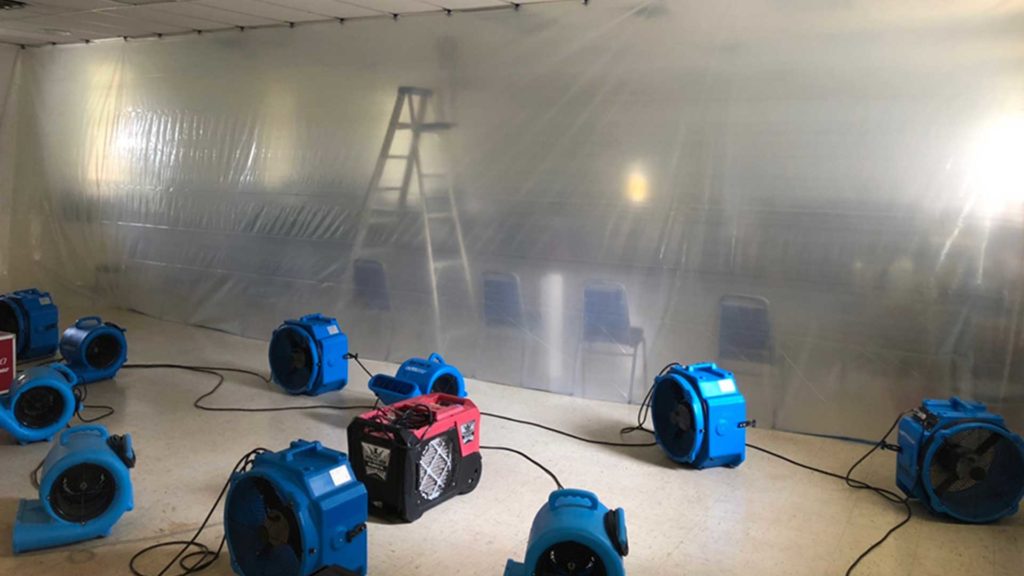
Once excess water has been removed, technicians work with airflow, humidity, temperature, and vapor pressure to move moisture out of affected materials. S500 describes professional drying as controlling airflow, dehumidification or ventilation, and temperature while working toward established drying goals.
Equipment is only one part of that system. Technicians also need to know where moisture remains and whether conditions are improving. Daily monitoring provides the data needed to adjust the drying plan when materials are not responding as expected.
Think of the difference this way: turning on fans tells you that air is moving. Moisture readings tell you whether the building is drying.
Rytech combines professional drying methods with advanced detection technology and daily job monitoring. The broader Rytech service model emphasizes accurate assessment, efficient restoration, fast recovery, and restoring salvageable materials to minimize unnecessary demolition, downtime, and costly repairs.
Myth: “There Are No Health Concerns If the Water Gets Cleaned Up Quickly”
Fast water removal helps reduce continued exposure, but the source and condition of the water still matter.
Category 2 water contains significant contamination. Category 3 water can contain harmful agents. Even Category 1 water can deteriorate depending on the environment, materials contacted, temperature, and length of time involved.
Professional restoration evaluates those conditions before deciding how cleaning and drying should proceed. S500 also notes that drying can aerosolize soil and particulates present in an environment, which is one reason restorers evaluate cleaning needs before implementing rapid air movement.
Moisture left behind can create another concern by supporting microbial growth. Rytech's mold guidance focuses on moisture control, appropriate containment, cleaning, removal of affected moldy materials when necessary, and drying water-damaged areas.
The goal is not simply to make the water disappear. The goal is to address the conditions the water created.
Myth: “Professional Water Damage Restoration Is Always Too Expensive”
A water loss creates an unexpected expense, so cost naturally becomes part of the conversation. Professional inspection helps determine what work the property actually needs before assumptions drive the scope.
Advanced moisture detection can distinguish affected areas from surrounding materials that may not require the same treatment. Drying measurements show whether salvageable materials are responding. That information supports Rytech's restore-first approach and can help minimize unnecessary demolition, downtime, and costly repairs.
Documentation adds another layer of value. S500 calls for consistent project documentation because that information supports project planning, execution, administration, and cost.
Insurance claims can be unfamiliar territory for homeowners and business owners. Rytech's experience working with insurance professionals can help property owners understand the restoration portion of the process, while photos, moisture readings, and project documentation give agents, adjusters, carriers, and other interested parties clearer information about the loss.
Myth: “Once the Area Looks Dry, There’s No Lasting Problem”
Your eyes cannot measure moisture inside drywall or beneath flooring.
A wall can regain its normal appearance while moisture remains within the assembly. Carpet fibers can feel dry even though the pad or subfloor is still damp. A wood floor may lose its surface moisture before deeper layers reach the desired condition.
S500 requires more than a visual finish line. Professional moisture-detection equipment is used during inspection, and relevant moisture measurements are monitored throughout drying. Drying equipment should remain in operation until technicians verify and document that the drying goals have been achieved in the materials being dried.
This is especially useful in complicated assemblies where several materials overlap. One layer can dry faster than another.
A room that looks dry gives you an impression. Verified moisture readings provide evidence.
Myth: “If I Don’t See Damage Right Away, There Isn’t a Problem”
Hidden water damage can remain out of sight until materials begin showing changes.
A plumbing leak may spread inside a wall before paint changes color. Water beneath flooring can travel beyond the room where the leak began. An upstairs loss can move downward into a ceiling assembly while the original room looks relatively normal.
Imagine a leak behind a dishwasher in a Woodinville home. The homeowner sees a small amount of water at the cabinet edge and cleans it up. Professional moisture detection may reveal that water continued beneath the flooring where no surface damage was visible.
S500 specifically directs restorers to document water migration into building materials and contents using professional moisture-detection equipment.
When a leak happens, do not judge its reach only by what you can see. Ask where gravity, absorbent materials, and connected assemblies could have carried the water.
How Professionals Decide What Can Be Restored
A professional restoration decision begins with the material, not simply the fact that it became wet.
Technicians consider water category, exposure time, contamination, material composition, physical condition, and whether the material can be successfully cleaned and dried. Contents receive similar consideration. S500 specifically identifies restoration cost, replacement value, and sentimental, legal, artistic, cultural, or historical value as factors in evaluating contents.
That last point matters more than many property owners expect. A family photograph, business record, piece of artwork, or one-of-a-kind keepsake may deserve a different restoration approach than an easily replaced everyday object.
S500 also recognizes that specialized drying environments can be used for certain contents, ranging from controlled rooms to freeze-drying systems for books, documents, and electronic media.
Rytech's restore-first mindset brings the same practical thinking to structural materials. Materials that respond successfully to cleaning and drying can remain when conditions support restoration, while materials that are beyond repair can be identified for removal.
Seattle Experience Adds Local Context to Water Damage Restoration
Professional standards create a consistent technical foundation. Local experience helps a restoration team apply that knowledge to the buildings and losses found throughout its service area.
Rytech Restoration of Seattle serves Seattle in King County along with surrounding Washington communities that include Bellevue, Kent, Renton, Federal Way, Woodinville, and Tacoma, with the supplied service territory extending through King, Snohomish, and Pierce counties.
Local restoration work can involve single-family homes, condominiums, multifamily properties, offices, retail spaces, restaurants, and other commercial buildings. These properties can contain layers of drywall, wood framing, concrete, carpet systems, finished wood, cabinets, insulation, tile, and other materials that react differently to water.
Plumbing failures, appliance leaks, overflowing fixtures, roof-related intrusions, and other water events can create very different moisture patterns. Knowing where to begin looking comes from experience. Knowing where the water actually traveled comes from professional inspection and moisture measurements.
“Years of restoration experience around Seattle teach you not to judge a water loss by the first wet spot you find. We work with homes, multifamily properties, and commercial buildings that can include wood framing, drywall, concrete, finished wood, tile, carpet, cabinets, and layered floor assemblies. Plumbing failures, appliance leaks, and water entering through the building exterior can travel into places a property owner may never think to check. Our experience helps us know where to investigate, while professional moisture readings tell us what the affected materials are actually doing.”
Rene Castillo, Owner, Rytech Restoration of Seattle
That combination of field experience and measurable data gives property owners a clearer path forward.
Why Property Owners and Insurance Professionals Trust Professional Restoration
Professional water damage restoration brings structure to an event that can otherwise feel unpredictable.
ANSI/IICRC S500 expects restorers to be qualified through education, training, and experience for the work they perform. The standard also calls for professional inspection, project documentation, drying goals, ongoing moisture monitoring, and final verification.
Rytech builds on that framework with nearly three decades of restoration experience across its broader network, advanced detection methods, daily job monitoring, project documentation, and a restore-first approach designed to minimize unnecessary demolition and disruption. Rytech's current brand materials also emphasize 24-hour emergency contact, insurance assistance, consistent restoration workflows, experienced technicians, and a clear path back to normal for customers facing property damage.
For homeowners, professional restoration provides answers about what became wet and how drying progress will be measured. Property managers and commercial owners gain a coordinated process that can help reduce disruption. Insurance agents, adjusters, carriers, and referral partners benefit from documentation and communication that make the scope and progress of the project easier to understand.
When water reaches places you cannot see, professional water damage restoration services in Seattle can help identify moisture migration, evaluate affected materials, remove excess water, establish drying goals, and document the property's progress toward a dry condition.
Get Inspected to Stay Protected With Rytech Restoration of Seattle
A leaking supply line in Seattle, wet flooring in Bellevue, hidden moisture in Renton, or a water loss at a commercial property in Kent can extend farther than the first visible signs suggest. Finding the full moisture footprint gives you a better starting point than guessing from what looks wet.
If you are dealing with water damage, suspect hidden moisture, or have questions after a plumbing leak, appliance failure, overflow, or other water intrusion, contact Rytech Restoration of Seattle. The local team can inspect the affected area, explain the findings, and help you understand the restoration process ahead.


